Published: 22nd April 2026
A missed delivery, the wrong SKU in the box, stock counts not matching up to what is shown on your website — normally this is when sellers begin wondering what is ecommerce fulfilment and if they can still feasibly continue doing all of it themselves?
Ecommerce fulfilment is even more simple; it consists of stock storage, picking ordered products, packing them correctly, shipping to the customer and handling any returns coming back. At the core, it is a foundation that keeps running any order of orders online. Fulfillment is how the right product gets to the right customer at the right time, assuming you close a sale on your website.
With fewer sellers, fulfilment usually starts on a spare table, in the garage or at the back of a shop; That can work for a while. However, when order volume increases, sales channels expand and consumer expectations tighten — fulfilment becomes about control, precision and speed rather than simply putting boxes into bags.
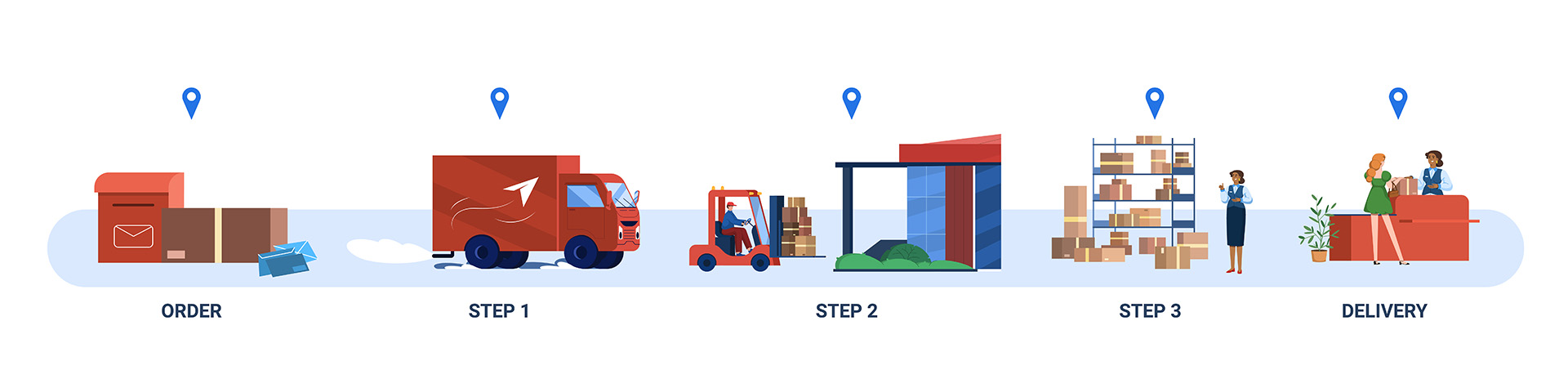
In practice, ecommerce fulfilment is much broader than just dispatch. This process begins before even receiving an order, where stock is booked in into a warehouse and checked so as to document its entry clearly so that it can be easily located later. After taking in an order from a customer, the fulfilment operation processes that order data via software assigning it to pick workers confirming items are checked and packed, having designated shipping methods printed (or assigned) on packages and feeding tracking information back to both seller and buyer.
That might sound simple, but the tiny problems at each step can snowball into large commercial issues. Your website can oversell stock if it is not well booked. When picking becomes a hurry, the wrong item goes out. Goods arrive broken with packaging несовершенство. If you process returns slowly, it costs you sellable inventory and frustrates customers who are waiting for refunds or exchanges.
That is where good fulfilment steps in to lessen those friction points. It delivers a cleaner operation, more consistent in-delivery performance for sellers, and time-saving from fixing avoidable errors.
The first stage is goods-in. This is when the inventory comes in into the warehouse and it checked against what was earlier expected. Verifying quantities, product codes, status and packaging is required. Make a mess of this section, and every stock figure to follow is less trustworthy.
Next comes storage. Items are assigned to warehouse locations which enable both effective picking as well as inventory precision. For example, fast-moving products can be kept in more accessible areas while slower lines might require a different storage approach. Its not just about holding stock, but holding it in a manner that enables rapid and precise order fulfilment.
Then comes order management. As soon as an order is generated through your eCommerce website, marketplace or any other sales channel the fulfilment system imports it and queues up for picking. This is where software matters. Manual downloading and menial spreadsheets are slower and more error-prone than integrated order automation with real-time stock updates.
Picking stage: In this final stage, your warehouse staff picks the products that have been ordered. You then move onto the packing stage – which, in fact, is more consequential than most sellers know. Good packing is about more than just the presentation. It is about taking care of the products, placing the accurate label, verifying that it matches what arrived and matching each packaging with its respective order so you do not end up overpaying on shipping.
Despatch is the last step outward. The selected courier is assigned, tracking is created, and the customer is notified. Returns management, which follows that — is also included in fulfilment. Returned goods have to be received, checked, processed and returned into stock or quarantined if damaged.
Fulfilment is right in between the sale and customer experience. You can throw money at ads, polish your product pages, and improve conversion rates but if your operation fails with late, defective or incorrect orders — customers will remember the service more than they do your marketing.
It also affects margin. When you first start packing orders in-house it can appear cheaper on paper because the costs are wrapped up inside your time, your people and your space. Fulfilment is rarely free, particularly after storage, labour, shipping admin, packaging materials – not to mention failed deliveries (the last mile), picking errors and returns handling too!
But that does not mean outsourced fulfilment is always the solution. That means sellers need full transparency on what fulfilment is really costing them already.
If you manage fulfilment in-house, you have control. A stock you can see, a process that is writ large for your oversight, and the ability to implement quick changes without having another provider in the loop. That might make sense for very low order volumes, or if the product needs special handling.
The downside is that in-house fulfilment becomes increasingly difficult as you scale. If you get more orders, then you need more staff, more space, more packing benches, more courier management. More returns admin. And a lot higher pressure during busy times. A team that spends the whole day printing labels and chasing stock issues isn't spending that time marketing, buying, developing product or growing customers — and without these activities, they will not generate profits.
Outsourced ecommerce fulfilment shuffles those packing, warehousing and dispatch jobs off to a provider known as a third-party logistics provider, or 3PL for short. It is up to the provider to store your goods, manage them as orders come in and generally deal with logistics on a day-to-day basis. The no-brainer of ecommerce for many, combines reduced operational pressure with a simpler profile and fewer fixed costs; and these setups can outscale an in-house operation more efficiently.
However, not all 3pl fulfilment is created equally. Top headline pricing is only part of the story for sellers. Things like accuracy levels, returns support, real-time stock visibility, integrations with the platforms you use to sell & customer support are just as important as storage and pick fees.
Things to take into consideration while choosing an ecommerce fulfilment partner
If outsourcing is something you are looking into, the right partner should simplify your operation and not complicate things further. That starts with visibility. Your system needs to convey what stock is in the warehouse, what has been despatched, which are delayed and also returned systems without waiting for manual updates.
Accuracy is another major point. One supplier providing you the barcode scanning, check weighing and order verification processes is giving you much more than a packing service. It is providing you controls that lessen the complaints and costs of replacement made by customers.
Flexibility also matters. Others require a low-volume no-minimum setup. For some it is support for hyper-growth, multiple routes-to-market or UK-EU fulfilment. The ideal for your business model, product type and location of your customers will depend on.
Support should not be designed as a cushioning bonus. Responding quickly to operational issues - a stock mismatch, an inbound delivery running late, a returns query or a platform error - will save you time and help protect your customer experience. A fulfillment partner needs to feel like an extension of your operation, not a black box.
One of the most misunderstood terms is fulfilment, which people often perceive as only shipping. It does not. Shipping only happens as one link in the chain. The actual work encompasses stock management, software alignment, fulfilment workflow planning, quality inspections and returns.
Additionally, only huge brands outsource fulfilment. Indeed, smaller sellers outsource exactly because they can not afford warehouse rent, permanent staff and productivity software alone. Much of that pressure can be taken away with a pay-as-you-go model.
There is also the notion that outsourcing equates to a loss of control. Bad providers can induce that sensation, but a frictionless business should offer you the opposite by way of data-driven transparency, defined processes, and ongoing support. An example of this is Storeship that builds its proposition around that practical balance — modern fulfilment, but underpinned by live visibility, strong checking processes, and direct account support; not a hands-off warehouse-only model.
Not automatically. If you are sending only a few orders per week, spending very little on stock and can spare the time then keeping fulfilment in-house may be the cheaper and easier option.
However, if dispatch is burning up your day, stock is too dispersed and orders come in via multiple channels or errors have begun affecting reviews & repeat sales, fulfilment becomes more of a strategy issue rather than just a back office operation. This is where systems, process controls and outsourced support begin to provide real value.
If there is one way to think about fulfilment in e-commerce, it should not be seen as a warehouse service but rather as a function for growth. Poorly done, it incurs costs and complaints (both operational drag). When done right, it allows you to ship correctly, scale with less friction, and ultimately provide customers with the experience they hoped for when clicking buy.
If your asking about what is ecommerce fulfilment, a bigger question probably lurks in the background: should your business still be spending its energies packing orders or pursue growth brand?
Get in Touch
Tel: 07427 345678
Track my Package


Information
About Us
Privacy Policy
Resources
Environment Information
FAQ